


Evening School Sem1 2026
Two courses taught March - June
The Melbourne School of Continental Philosophy is proud to present the Evening School Sem1 2026 curriculum. Both courses run for 12 weeks. As always significant discounts apply for those enrolling in multiple courses. If you have any questions which aren't in our FAQs please email
When: 16 Mar - 10 Jun
Where: All courses will be at Unit 4/9 Wilson Ave, Brunswick and online via Zoom. The best way to reach Unit 4 is via the alleyway off Black St. Also it's worth noting that Melbourne Summer Time (AEDT) is 11 hours ahead of UTC (5pm here is 7am in Berlin and 10pm in LA).
Payment: All payment must be made via credit card during enrolment.
Evening School Programme
2 hours per week for 12 weeks
Course Descriptions
 Being and Power: An Examination of Spinoza’s Philosophy
Lecturer: Jon Rubin
Starts: Mon 6:30-8:30pm 16 Mar
Full Schedule: March 16, 23, Break, April 6, 13, 20, 27, May 4, 11, 18, 25, June 1, 8
Location: Brunswick and online via Zoom.
Atheist Jew of Voorburg, or Novalis’ Gottbetrunkener Mensch (God intoxicated man)? A precursor to Nietzsche’s most radical ideas on living beyond good and evil, the “purest sage” (HATH §258) or the pale, vampiric, consumptive spinner of metaphysical webs (GS §372)? The most radical, democratic egalitarian, or the racially fearful thinker who ended his last, unfinished, work in a morass of misogyny? Provocative thinker of the body, or conservative espouser of the “life of the mind”?
To understand Spinoza’s thought, his status as a ‘Savage Anomaly’, we must, above all else, not try to reconcile these oppositions, nor imagine a middle ground.
It is Wolfson’s description of Spinoza as, “the last of the medievals and the first of the moderns” (a necessarily true idea, parading as a paradox) that perhaps makes sense of why Spinoza’s thought, and the reception of his thought, is so torn between extremes. To take up the first duality (atheist or god-intoxicated), in order to offer one example: yes, he thought the proper subject of metaphysics was God (a positively Ancient position) but he also thought God was nature, knowable through reason, experience, and experiment.
In the end, the only thing we can do is to actually read his work, and decide for ourselves and this is what this course will enable.
This will be a twelve week, two part course. The first part of the course will serve as a more general introduction and overview of Spinoza’s Ethics. The first week, will begin by providing the missing background philosophical theory and context, without which, despite the claims to be geometrically demonstrated, the Ethics remains nearly impossibly impenetrable. The next five weeks will cover each of the five Books of the Ethics, at the end of which we should have a good, high level grasp of how the text functions and its overall aims and preoccupations.
The second part of the course will be a more detailed examination of six puzzles in Spinoza’s philosophy:
- the nature of perfection;
- the ontological argument for the existence of God;
- Spinoza’s epistemology, the problem of truth, adequacy and intuition;
- the ethics in Spinoza’s ethics, “A free man thinks about death least of all, and his wisdom is not a meditation on death, but on life”;
- the problem of love and friendship;
- the question of the eternity of part of the mind, after the body’s death.
Lecture breakdown:
Core Key texts for the whole course:
Primary texts:
- Spinoza, Benedictus de. 1985. The Collected Works of Spinoza, Volume I. Translated by Edwin M. Curley. Vol. 1. Princeton University Press.
- Spinoza, Benedictus de. 2016. The Collected Works of Spinoza, Volume II. Translated by Edwin M. Curley. Vol. 2. Princeton University Press.
PART ONE
Week 1) A terminological tangle: the Ethics purportedly proceeds using the ‘geometrical method’. Tragically, Spinoza is very bad at it, leaving many key terms undefined, or defining terms only after having copiously used them. This first week will be explaining these key terms, their historical background, and some of the ways in which Spinoza’s use of these terms is novel. These terms include: substance, attribute, mode, essence, form, nature.
Key texts:
- Lord, Beth. 2010. Spinoza’s Ethics. Indiana Philosophical Guides. Indiana University Press.
Week 2) Book One: God
Book One of the Ethics sets up the framework for the rest of the work. We need to see how there must necessarily be a substance (whatever one of those it), consisting of an infinity of attributes (whatever they may be), expressed in an infinity of modes (you get the point), that acts necessarily in accordance with its essence (the hardest one of all).
And why this is God.
Key texts:
- Spinoza, Benedictus de. 1985. ‘Book One of the Ethics: Of God’. In The Collected Works of Spinoza, Volume I, translated by Edwin M. Curley, vol. 1. Princeton University Press.
- Gueroult, Martial. 1968. Spinoza. I. Dieu. Vol. 1. Aubier-Montaigne. Copac.
Week 3) Book Two: Minds, Bodies, and Knowing
Book Two of the Ethics begins by tackling the mess Descartes had left behind: namely the status and composition of bodies, minds, and their relation to one another. Having provided his own, unique, solution to this problem, Spinoza also lays out his account of knowledge and the ways and reasons we fail to know.
Key texts:
- Spinoza, Benedictus de. 1985. ‘Book Two of the Ethics: Of the Nature and Origin of the Mind’. In The Collected Works of Spinoza, Volume I, translated by Edwin M. Curley, vol. 1. Princeton University Press.
- Gueroult, Martial. 1974. Spinoza. II. L’Âme. Vol. 2. Georg Olms. Copac.
Week 4) Book Three: Passions and Actions, understood geometrically
In his earlier work, Spinoza’s account of the passions was derived from Descartes’ Passions of the Soul. In the Ethics, he completely reworks his account of the affects. Importantly, this is an demonstration not just of how and why we suffer from passionate affects, but also of the existence and function of active affects in which we find the first account of our freedom.
Key texts:
- Spinoza, Benedictus de. 1985. ‘Book Three of the Ethics: Of the Origin and nature of the Affects’. In The Collected Works of Spinoza, Volume I, translated by Edwin M. Curley, vol. 1. Princeton University Press.
- Armstrong, Aurelia. 2013. “The Passions, Power, and Practical Philosophy: Spinoza and Nietzsche Contra the Stoics.” Journal of Nietzsche Studies 44 (1): 6–24. https://doi.org/10.5325/jnietstud.44.1.0006.
- Look, Brandon C. 2007. “Perfection, Power and the Passions in Spinoza and Leibniz.” Revue Roumaine de La Philosophie 51 (1–2): 21–38.
Week 5) Book Four: The Free Man: From the individual to the State and back again.
Book Four demonstrates the necessity of our social existence. This social existence on the one hand offers the greatest of benefits as the most useful thing for anybody is another person. On the other hand it threatens the greatest of dangers, as the “mob is terrifying if not terrified”.
Key texts:
- Spinoza, Benedictus de. 1985. ‘Book Four of the Ethics: Of Human Bondage, or the Powers of the Affects’. In The Collected Works of Spinoza, Volume I, translated by Edwin M. Curley, vol. 1. Princeton University Press.
- Richardson, Janice. 2009. ‘Chapter Three: Spinoza’. In The Classic Social Contractarians. Ashgate Publishing.
- Vardoulakis, Dimitris. 2020. “Preamble.” In Spinoza, the Epicurean: Authority and Utility in Materialism. Spinoza Studies. Edinburgh University Press.
Week 6) Book Five: from philosophical therapy to God-drunkenness (Gottbetrunkener). Book Five of the Ethics continues where Book Four had left off: how is it that we are able to become: more wise, more free, more unbothered by both hope and fear. What is the relationship between ethics, freedom, and knowledge? The second half of Book Five, is, to put it politely, somewhat divisive.
“All things excellent are as difficult as they are rare”: what does it mean for part of our mind to be eternal? This is the most difficult part of the whole Ethics. It is likely the real reason he was thrown out of the Jewish community Amsterdam. Given Spinoza’s earlier demonstration (Week 3) that our mind and our body are “the same individual”, how can even a part of one, survive the total destruction of the other? It is a doctrine which on the one hand is, “Rubbish which causes others to write rubbish”; on the other hand, it is the crowning doctrine of Spinoza’s whole philosophy. The point and pinnacle of his thought, that is pursued from his earliest work till his last. Whichever side you take on this divide, the point of this lecture is to make it as intelligible as possible, just what Spinoza’s position was.
Key texts:
- Spinoza, Benedictus de. 1985. ‘Book Five of the Ethics: Of the Power of the Intellect, or on Human Freedom’. In The Collected Works of Spinoza, Volume I, translated by Edwin M. Curley, vol. 1. Princeton University Press.
- Adler, Jacob. 2014. “Mortality of the Soul from Alexander of Aphrodisias to Spinoza.” In Spinoza and Medieval Jewish Philosophy, edited by Steven Nadler. Cambridge University Press.
- Deleuze, Giles. 1990. ‘Chapter 19: Beatitude’. In Expressionism in Philosophy: Spinoza, by Gilles Deleuze, translated by Martin Joughin. Zone Books.
PART TWO
The second part of the course tackles specific problems in Spinoza’s Ethics.
Week 7) Degrees of reality, essence, and perfection: making sense of becoming better. Just what is the ethics in the Ethics? For a book called ‘Ethics’, there is not a lot that is recognisable as ethics. Not a single trolley to be seen! Rather than offering impossible algorithm to implausible thought experiments, Spinoza is concerned with a simpler task: what does it mean to be better, and how do we achieve this?
(“Imagine a self-help guide, with no self and less help”)
Key texts:
- Pasnau, Robert. 2021. ‘Qualitative Change’. In The Routledge Companion to Medieval Philosophy. Routledge.
- Richardson, Janice. 2020. ‘Spinoza’s Conception of Personal and Political Change: A Feminist Perspective’. Law and Critique 31 (2): 145–62. https://doi.org/10.1007/s10978-019-09255-6.
Week 8) Getting to God as quickly as possible, or everything you wanted to know about the ontological argument, but were afraid to ask Kant. As Deleuze following Gueroult pointed out: Spinoza does not begin with God. Rather, the first sixteen propositions of the Ethics get to God as quickly as possible. But does Spinoza offer anything that is describable as an ontological argument? He certainly ascribes necessary existence to substance. Does this mean that his philosophy can be rejected as confused dogmatism?
Does Kant truly offer a confutation of ontological arguments, or a rebuttal in refutation-drag?
Key texts:
- Dutton, Blake D. 1993. ‘Suarezian Foundations of Descartes’ Ontological Argument:’ The Modern Schoolman 70 (4): 245–58. https://doi.org/10.5840/schoolman199370436.
- Friedman, Joel I. 1982. ‘Was Spinoza Fooled by the Ontological Argument?’ Philosophia 11 (3–4): 307–44. https://doi.org/10.1007/BF02380843.
- Oppy, Graham, Joshua Rasmussen, and Joseph Schmid. 2025. “Ontological Arguments.” In The Stanford Encyclopedia of Philosophy, Fall 2025, edited by Edward N. Zalta and Uri Nodelman. Metaphysics Research Lab, Stanford University. https://plato.stanford.edu/archives/fall2025/entries/ontological-arguments/.
Week 9) Spinoza and the “Maker’s knowledge tradition” or why the passions and the State are knowable but chemistry may not be. One of the bedrocks of the Ethics is that there are three different kinds of “knowledge”, or thinking. Spinoza is annoyingly unhelpful in his explanations of what kinds of things would count as falling under each type. Is he a proto-experimentalist combined with critical theorist? or something more rationalist-hued?
Key texts:
- Curley, Edwin M., trans. 1985. ‘LETTER 6. Comments on the Most Noble Robert Boyle’s Book on Niter, Fluidity and Solidity’. In The Collected Works of Spinoza, Volume I, by Benedictus de Spinoza, vol. 1. Princeton University Press.
- Gaukroger, Stephen. 1986. ‘Vico and the Maker’s Knowledge Principle’. History of Philosophy Quarterly 3 (1): 29–44. JSTOR.
Week 10) Seeing, and approving the better, but following the worse. Spinoza’s answer to why it’s not just this timeline that’s the worst.
“… video meliora, proboque,
deteriora sequor …”
Spinoza quotes these lines from Ovid’s Metamorphoses where Medea is lamenting her desire for Jason, which she rationally knows is wrong, but still can’t help herself. So much meaning and philosophical depth is packed into these five words:
“ … I see the better, approve it;
I follow debasements …”
Why would Spinoza so love these lines? Note, that we are still not in a contemporary ethical scene; we know what the right thing to do is. The problem is that we fail to turn understanding into action. For a rationalist, can there be any more frightening scenario?
Key texts:
- Alanen, Lilli. 2012. ‘Spinoza on Passions and Self-Knowledge: The Case of Pride’. In Emotion and Cognitive Life in Medieval and Early Modern Philosophy, edited by Martin Pickavé and Lisa Shapiro. Oxford University Press.
- http://www.oxfordscholarship.com/view/10.1093/acprof:oso/9780199579914.001.0001/acprof-9780199579914-chapter-13.
- Garrett, Aaron. 2017. ‘Self-Knowledge and Self-Deception in Modern Moral Philosophy’. In Self-Knowledge: A History, edited by Ursula Renz. Oxford University Press. https://doi.org/10.1093/acprof:oso/9780190226411.003.0011.
Week 11) The Power of Love: the passion, the perversion, the perfection, of this most problematic of emotion.
Love, as a passion, is remarkably simple for Spinoza: it is the affect of joy accompanied by the idea of an external cause. But simply turning from the idea of an external cause to an internal one, is insufficient to become wise. Spinoza is immersed in the seventeenth century angst about pride and other forms of deleterious self-love. But all passions can become actions. How then should we understand both the rational and the intuitive forms of love?
Key texts:
- Carlisle, Clare. 2017. “Spinoza’s Acquiescentia.” Journal of the History of Philosophy 55 (2): 209–36. https://doi.org/10.1353/hph.2017.0027.
- James, Susan. 2012. ‘Spinoza on the Passionate Dimension of Philosophical Reasoning’. Emotional Minds: The Passions and the Limits of Pure Inquiry in Early Modern Philosophy, 71.
- Harvey, Warren Zev. 2014. ‘Ishq, Hesheq, and Amor Dei Intellectualis’. In Spinoza and Medieval Jewish Philosophy, edited by Steven Nadler. Cambridge University Press.
Week 12) “Spinoza’s Heresy” just what is the final goal of Spinoza’s Ethics? And why did it get him kicked out of the Jewish community?
I will return to the problems with the second half of Book Five of the Ethics.
Key texts:
- Adler, Jacob. 2014. ‘Mortality of the Soul from Alexander of Aphrodisias to Spinoza’. In Spinoza and Medieval Jewish Philosophy, edited by Steven Nadler. Cambridge University Press.
- Nadler, Steven. 2001. Spinoza’s Heresy: Immortality and the Jewish Mind. Clarendon Press ; Oxford University Press.
 The Cybernetic Culture Research Unit (Ccru)
Lecturer: Vincent Lê
Starts: Wed 6:30-8:30pm 18 Mar
Full Schedule: March 18, 25, April 1, 8, 15, 22, Break, May 6, 13, 20, 27, June 3, 10
Location: Brunswick and online via Zoom.
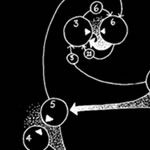
This course provides an introduction to the Cybernetic Culture Research Unit (Ccru). Initially established in 1995 at the University of Warwick to support philosopher and cyberfeminist Sadie Plant’s research before being banished from the academy and falling under Nick Land’s tutelage, the Ccru has become the subject of much myth and legend for its rather unorthodox compositions, conferences, art shows, and other activities, which sought to think with rather than about the cybercultures it studied. It was particularly in its later years outside the ivory tower that the Ccru took an increasingly strange and even occult turn. Free from the confines of institutional acceptability, no subject was considered too outrageous to devote serious investigation, be it H. P. Lovecraft’s Cthulhu mythos, Aleister Crowley’s qabbalistic numerology, or conspiracy theories about alien abductions and secret societies of Illuminati assassins. Many of the Ccru’s writings not only drew upon fictions, but sought to merge with them, becoming what it called—following Baudrillard—“theory-fictions” or “hyperstitions”: fictions that are not yet real, but might become so in the future. Through this polydrug cocktail of cyberculture, fiction, philosophical speculation, and the occult, the Ccru sought to stage an encounter with an inhuman “Outside” beyond the bounds of our reason.
The demands of its often drug-fueled collective thinking on little sleep would eventually lead to the Ccru’s virtual disbandment in 2003, with only sporadic communication on its Hyperstition blog before going radio silent in 2007. Its spectre nonetheless continues to haunt us today as many former members and associates have gone on to achieve some prominence in their own right, such as philosophers Mark Fisher, Anna Greenspan, Reza Negarestani, Luciana Parisi, Kodwo Eshun, Iain Hamilton Grant, and Maya B. Kronic, as well as artists Kode9 and Jake and Dinos Chapman, among others. Thirty years after its emergence, this course covers both the Ccru’s collective writings and some of its members’ subsequent trajectories. Along the way, we will arithmetically construct the notoriously enigmatic Numogram from scratch, weave the strangest of connections through Alphanumeric Qabbala, and perform a live lemurian demon summoning by playing games of Subdecadence.
Week 1. The Story Goes Like This…
We begin with a history of the Ccru and some of its key members and associates, as well as a general overview of its main research interests.
Suggested readings:
- Andy Beckett, “Accelerationism: How a Fringe Philosophy Predicted the Future We Live In,” The Guardian, May 11, 2017, https://www.theguardian.com/world/2017/may/11/accelerationism-how-a-fringe-philosophy-predicted-the-future-we-live-in.
- Ccru, “Communiqué One: Message to Simon Reynolds,” in Ccru: Writings 1997-2003 (Urbanomic, 2017), 7.
- Ccru, “Communiqué Two: Message to Maxence Grunier,” in Ccru: Writings, 9-12.
Weeks 2-3. Cyberfeminism
As the Ccru was originally set up to support the work of Sadie Plant, we first focus on her philosophy of cyberfeminism and the curious complicity she uncovers between women and machines as they increasingly spiral out of man’s control.
Suggested readings:
- Sadie Plant, “The Future Looms: Weaving Women and Cybernetics,” in Body and Society 1, 3-4 (1995): 45-64.
- Sadie Plant, “On the Matrix: Cyberfeminist Simulations,” in The Gendered Cyborg: A Reader, eds. Gill Kirkup, Linda Janes, Kathryn Woodward, and Fiona Hovenden (Routledge, 2000), 265-275.
- Ccru, “Swarmachines,” in #Accelerate#: The Accelerationist Reader, eds. Robin Mackay and Armen Avanessian (Urbanomic, 2014), 321-331.
Week 4. Theory-Fiction
We then consider how the Ccru’s efforts to voyage beyond the limits of human reason by jacking into nineties cybercultures initially incited it to model its writings—or what it called “theory-fictions”—on dystopian science fiction stories about the technologically induced end times.
Suggested readings:
- Nick Land, “Meltdown,” in Fanged Noumena: Collected Writings 1987-2007, eds. Robin Mackay and Ray Brassier (Urbanomic, 2012), 441-460.
- Ccru, “Barker Speaks: The Ccru Interview with Professor D. C. Barker,” in Ccru: Writings 1997-2003 (Urbanomic, 2017), 155-162.
Week 5. Hyperstition
The key concept that cohered the Ccru’s eclectic output is “hyperstition,” meaning “fictions that make themselves real.” The fifth week delves into this idea that fictions—such as dystopian sci-fi stories and religious doomsday myths—are actually a kind of realism to the extent that they herald the future reality of humanity’s annihilation at the hands of a coming AI-God.
Suggested readings:
- Ccru, “Lemurian Time War,” in Ccru: Writings, 33-52.
- Ccru, “Axsys-Crash,” in Ccru: Writings, 121-122.
Weeks 6-8. Qabbalism
The sixth to eighth weeks examine the Ccru’s occult turn to various numbering practices—like the Numogram, Subdecadence, and Alphanumeric Qabbala—in an effort to break out of our all too human language and commune with the alien Outside.
Suggested readings:
- Ccru, “The Origins of the Cthulhu Club,” in Ccru: Writings, 59-64.
- Ccru, “The Vault of Murmurs,” in Ccru: Writings, 65-71.
- Ccru, “Y2K Letter,” in Ccru: Writings, 241-3.
- Ccru, “Qaballa Unshelled,” in Ccru: Writings, 305-7.
- Ccru, “Pandemonium,” in Ccru: Writings, 241-3.
- Ccru, “Decadence,” in Ccru: Writings, 95-6.
- Nick Land, “Qabbalah 101,” in Fanged Noumena, 591-606.
Week 9. NeoChina
This week looks at Anna Greenspan’s and Nick Land’s post-Ccru writings on Shanghai and other hypermodern megacities as special urban zones of absolute deterritorialization, almost sentient artificial superintelligences bootstrapping themselves into being.
Suggested reading:
- Anna Greenspsan, “Conclusion,” in Shanghai Future: Modernity Remade (Oxford University Press, 2014), 207-9.
- Anna Greenspan and Nick Land, “Neo-modern Shanghai and the Art of Abstraction,” in Flash Art, March 14, 2016, https://flash---art.com/article/neo-modern-shanghai-and-the-art-of-abstraction/.
Weeks 10-1. Right and Left Accelerationisms
The tenth and eleventh weeks pit against each other the two main political philosophies that emerged out of the Ccru: on the one hand, right accelerationism’s championing of a capitalism that has escaped all human regulation and control to race straight towards the technological singularity; on the other hand, left accelerationism’s critique of capitalist realism’s stagnant and monotonous culture as utterly incapable of creating anything original, exciting, or new.
Suggested readings:
- Nick Land, “The Dark Enlightenment,” Urban Futures 1.0, 2012, https://oldnicksite.wordpress.com/?s=dark+enlightenment.
- Mark Fisher, “‘The Slow Cancellation of the Future,’” in Ghosts of My Life: Writings on Depression, Hauntology, and Lost Futures (Zero Books, 2014), 2-29.
- Mark Fisher, “Terminator vs Avatar,” in #Accelerate#, 335-346.
Week 12. Judgement Day
The course wraps up by considering several other Ccru members’ and associates’ subsequent trajectories, from Jake and Dinos Chapman’s transgressive exhibitions and Orphan Drift’s cyberpunk artworks, to Reza Negarestani’s gulf futurist theory-fiction and dubstep pioneer Kode9’s sonic warfare.