


Evening School Sem2 2026
2 course running August - November
The Melbourne School of Continental Philosophy is proud to present the Evening School Sem2 2026 curriculum. We have one 10-week course and one 12-week course. As always significant discounts apply for those enrolling in multiple courses.
When: 17 Aug - 11 Nov
Where: Philosophy and Poetry will be running in-person in Brunswick. Both courses are available for online enrolment. For international students please observe seasonal time changes for Melbourne relative to your timezone: AEST (UTC+10): Used from first Sunday in April to first Sunday in October. AEDT (UTC+11): Used from first Sunday in October to first Sunday in April.
Payment: All payment must be made via credit card during enrolment.
Evening Programme
2 hours per week
Course Descriptions
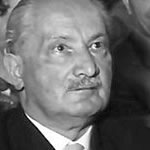 Philosophy and Poetry: The Originality of Poetry in the Writings of Martin Heidegger
Lecturer: Andrew Benjamin
Starts: Mon 6:30-8:30pm 17 Aug
Full Schedule: 10 Weeks: August 17, 24, 31, September 7, 14, 21, 28, October 5, 12, 19
Location: Brunswick and online.
The aim of this ten week course is to provide a way into the philosophy of Heidegger by concentrating – after a brief introduction - on a number of his engagements with poetry. The course will be text based.
Poetry for Heidegger can be taken as that which allows for his entire philosophical project to be presented. He writes, for example, in The Origin of the Work of Art: Language itself is poetry in the essential sense. But since language is the happening in which for man beings first disclose themselves to him each time as beings, poesy—or poetry in the narrower sense—is the most original form of poetry in the essential sense.
This doubled quality of poetry – the move between the ‘essential’ and poetry as a specific writing practice - will be fundamental to the course. The first class will concentrate on the role of poetry in Kant’s The Critique of the Power of Judgement and Schlegel’s Atheneum Fragments after which there will be a direct transition to a general lecture on the role of poetry in Heidegger’s The Origin of the Work of Art. The rest of the course will be devoted to a detailed study of two texts by Heidegger: ‘What are Poets For?’ and “…poetically man dwells’.
Both texts are to be found – along with The Origin of the Work of Art in Poetry, Language, Thought. (Translated by Albert Hofstadter, Harper Perennial Modern Classics, 2001.) The page numbers noted below refer to that edition. Throughout the course reference will be made to the two poets whose work dominates Heidegger’s texts, namely, Hölderlin and Rilke. In addition, the course will incorporate a brief overview of Agamben’s engagement with Heidegger on poetry. The latter occurs in Agamben’s The Idea of Prose and The End of the Poem.
Course Schedule
Week 1 From Kant to Schlegel. Philosophy and Poetry.
Week 2 Poetry in The Origin of the Work of Art.
Week 3 What are Poets For? Pages 89-100
Week 4 What are Poets For? Pages 101-113
Week 5 What are Poets For? Pages 114-124
Week 6 What are Poets For? Pages 125-139
Week 7 Agamben on Heidegger and Poetry
Week 8 “…poetically man dwell’ Pages 211-219
Week 9 “…poetically man dwell’ Pages 220-227
Week 10 Poetry and Dwelling in Dangerous Time: Again Heidegger on Poetry
Bibliography
- Heidegger, Martin. Poetry, Language, Thought. Translated by Albert Hofstadter, Harper Perennial Modern Classics, 2001. [1, 2]
- Agamben, Giorgio. The Idea of Prose. Translated by Michael Sullivan and Sam Whitsitt, State University of New York Press, 1995.
- Agamben, Giorgio. The End of the Poem: Studies in Poetics. Translated by Daniel Heller-Roazen, Stanford University Press, 1999.
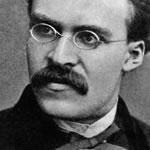 Nietzsche’s Symptomatology of Value
Lecturer: Max Lowdin
Starts: Wed 6:30-8:30pm 19 Aug
Full Schedule: 12 Weeks: August 19, 26, September 2, 9, 16, 23, (break), October 7, 14, 21, 28, November 4, 11
Location: Online via Zoom.
Moral judgements should never be taken literally … But semiotically, they are invaluable: if you know what to look for, moral judgements reveal the most valuable realities of the cultures and interiorities that did not know enough to ‘understand’ themselves. Morality is just a sign language, just a symptomatology …
This course will read selected passages from across Nietzsche’s work through the lens of two recurring and interconnected diagnostic themes. First, there is the tension between an active, future-oriented time of embodied but impersonal forces, with their instinctive agreements and disagreements, and a history of cultural habituation and training that channels what these forces can do, in given contexts.
This plays out as a genealogical drama at the world-historical level, on which Nietzsche describes himself as a ‘bearer of glad tidings,’ but also a ‘man of disaster’: ‘Because when truth comes into conflict with the lies of millennia there will be tremors, a ripple of earthquakes …’ The idols he took it on himself to smash were the hollow ideals of a moral culture bred into the instincts by the work of generations of life-denying hypocrisy.
The concept ‘God’ invented as a counter-concept to life, – it makes a terrible unity of everything that is most harmful … The concept of the ‘true world,’ invented to devalue the only world there is, – to deprive our earthly reality of any goal, reason or task! The concept ‘soul’ invented in order to make the body despised, to make it sick …
Second, Nietzsche tells us that he learned to become who he was by the interpretive opportunities of fortune and misfortune. To gain insight into things is not to analyse general concepts but to solve local physiological problems – riddles of perception and taste going deep into the body and brain and their variations in milieux. To the ‘refutations’ of idealism he opposes the involuntary evaluations of sensory experience: a biochemical training in signs, in the agreements or disagreements of combinations of elements. On this level, active and passive become a problem of re-education for the individual.
How do you know someone has turned out well? He only has a taste for what agrees with him … He instinctively gathers his totality from everything he sees, hears, experiences; he is a principle of selection … Nutrition, location, climate, recuperation are far more important than all the concepts people have considered important so far. This is exactly where people have to start re-educating themselves.
The goal is not to attempt a comprehensive reading of Nietzsche but to follow a trail of significant points through his writing where these themes appear. The course schedule will be roughly as follows (precise extracts from books TBA).
Course Schedule
Week 1. Introduction
Week 2. Selection from early works
Week 3. Human, All Too Human
Week 4. Dawn
Weeks 5-6. The Joyful Science
Week 7. Thus Spoke Zarathustra
Week 8. Beyond Good and Evil
Week 9. On the Genealogy of Morality
Week 10. The Anti-Christ; Twilight of the Idols
Week 11. Ecce Homo; The Case of Wagner
Week 12. Conclusion