


Winter School 2026
Seven courses taught Jun - Jul
The Melbourne School of Continental Philosophy is proud to present the Winter School 2026 curriculum. All courses are 10 hours in length. As always significant discounts apply for those enrolling in multiple courses. If you have any questions which aren't in our FAQs please email
When: 15 Jun - 24 Jul
Where: Courses will be taught at Unit 4/9 Wilson Ave, Brunswick and online via Zoom or exclusively on Zoom. Please check course details below. NB: The best way to reach Unit 4 is via the alleyway off Black St. Also it's worth noting that Melbourne (AEST) is 10 hours ahead of UTC (5pm here is 7am in Berlin and 10pm in LA).
Payment: All payment must be made via credit card during enrolment.
Winter Programme
2 hours per week for 5 weeks
2 hours per day for 5 days
Course Descriptions
 Kant and Marx: Aesthetic Fetishism and the Occult of Artistic Production
Lecturer: William Bennett
Starts: Mon 6:30-8:30pm 15 Jun
Full Schedule: June 15, 22, 29, July 6, 13
Location: Brunswick and online via Zoom.
This series of lectures draws together the philosophies of Kant and Marx through a critical assessment of aesthetics. In the first session I argue that in the Critique of Judgement Kant subordinates genius to taste and initiates a tendency in art theory to focus on the reception of artworks, which conflates art and aesthetics. I contend that this has generated a methodological lacuna with regard to artistic production: the philosophy of art has been looking west for the sunrise ever since. I introduce my theory of aesthetic fetishism in the second session, which draws consonance between the way that artistic production is occulted by aesthetic judgement and Marx’s theory of commodity fetishism, whereby value appears as a relation between commodities which perceptually obliterates that value is only generated through the exploitation of labour-power. The third and fourth sessions show how thinkers in both the post-Kantian and post-Marxian aesthetic traditions have perpetuated aesthetic fetishism, while offering important insights into ways to move beyond it. Most significantly in the turn in Marxian art theory from a concern with class antagonism to analyses of artistic value. In response to this turn I introduce in the concluding week important developments in the Marxian critique of value form, through the theory of real abstraction, and the critique of labour ontology, in order to argue that artistic production can be understood as a prepersonal heautonomous activity, a minor mode of production within the capitalist system of valorisation.
Course Schedule
Week 1: Kantian Subreption
In the first session I will provide an introduction to Kantian aesthetics and its central place within his philosophical system. I then specifically focus on the sections of the third Critique on beautiful art and genius. I argue that Kant subordinates genius to taste which constitutes a methodological lacuna with regard to artistic production. I will be critical of the conflation of art and aesthetics, which I argue has proliferated since Kant throughout the philosophy of art. Kant argues that aesthetic judgement is a heautonomous, i.e. self-legislating, form of judgement which underpins autonomous, i.e. self-ruling, determinate judgements. I transpose this principle of self-legislation to artistic production itself.
Recommended Readings:
- Immanuel Kant, Critique of Judgement, trans. Nicholas Walker (Oxford University Press, 2008) Sections 45, 46, 50, 52.
- Paul Guyer, Kant and the Experience of Freedom (Cambridge University Press, 2012)
- Joseph Cannon, “The Moral Value of Artistic Beauty in Kant,” Kantian Review, 16 (1) (2011): 113-126.
- Peter Osborne, “Art Beyond Aesthetics: Philosophical Criticism, Art History and Contemporary Art,” Art History, Vol 27, no. 4, Sept (2004)
Week 2: Aesthetic Fetishism
The second session will be focussed on Marx providing an outline of his critique of the labour theory of value before focussing on his theory of commodity fetishism. I draw on Beverley Best’s argument that Marx’s critique of value still has pertinence for analyzing financialisation, which still at bottom rests upon the exploitation of labour-power. I will explicate my own theory of aesthetic fetishism in light of Marx’s theory of commodity fetishism. I draw on William Pietz work on the conceptual origins of fetishism and how this relates to the constitution of the concept of the aesthetic. I also address work by Best and Michael Wayne that has attempted to draw Marx and Kant together through the aesthetic. However I reject their conception of aesthetic judgement as a kind of red pill to see through commodity fetishism.
Recommended Readings:
- Karl Marx, Capital: A Critique of Political Economy Volume 1, trans. Ben Fowkes (Penguin, 1990) Chapter 1
- Beverley Best, The Automatic Fetish: The Law of Value in Marx’s Capital (Verso, 2024), Part 2, Chapter 5 “Transformation of Profit II: Interest”
- William Pietz, The Problem of the Fetish (University of Chicago Press, 2022), Chapter 1 “The Problem of the Fetish”, and Chapter 5 “Fetishism and Materialism: The Limits of Theory in Marx”
- William Pietz, “Fetishism and Aesthetics: Kant, Marx and the Post-Enlightenment Problematic,” eds. Lexie Cook and Stefanos Geroulanos, Res: Anthropology and Aesthetics, 79-80, March 2023: 313-317.
- William Pietz, “Fetish,” in Critical Terms for Art History, ed. Robert S. Nelson and Richard Shiff (University of Chicago Press, 2003)
- Christoph Menke, “Modernity, subjectivity and aesthetic reflection”, in From an Aesthetic Point of View, Peter Osborne (Serpents Tail, 2000)
- Michael Wayne, Red Kant: Aesthetics, Marxism and the Third Critique (Bloomsbury, 2014)
- Jan Mieszkowski, Labours of Imagination: Aesthetics and Political Economy from Kant to Althusser (Fordham University Press, 2006)
- Beverley Best, Marx and the Dynamic of Capital Formation: An Aesthetics of Political Economy (Palgrave Macmillan, 2010)
Week 3: Post-Kantian Aesthetics
In the third week I trace the way that aesthetic fetishism infects art theory focussing on the Post-Kantian aesthetic tradition. I will show that Kant initiates a tendency to focus on the way that an audience engages with artworks, rather than the way that they are produced. I show how this is central to Schiller’s notion of aesthetic education. Schelling’s philosophy provides some insight into artistic production, as does Schlegel’s fragments which point toward art as a pre-personal mode of production. Despite Hegel’s effort to move away from aesthetics toward a philosophy of art, he nonetheless orients his theory around the reception of artworks. Heidegger shifts from feelings of beauty to disclosure of truth in his philosophy of art, which also focuses only on the reception of artworks. We will pick up on Agamben’s art theory which draws Hegel’s and Heidegger’s projects together, and his important account of poiesis.
Recommended Readings:
- F. Schlegel, From ‘Critical Fragments’ (1797). In: Bernstein JM, ed. Classic and Romantic German Aesthetics. Cambridge Texts in the History of Philosophy. Cambridge University Press; 2002:239-245.
- F. Hölderlin, ‘Oldest Programme for a System of German Idealism’ (1796). In: Bernstein JM, ed. Classic and Romantic German Aesthetics. Cambridge Texts in the History of Philosophy. Cambridge University Press; 2002:185-187.
- Friedrich Schiller, On the Aesthetic Education of Man, trans. Keith Tribe (Penguin 2016)
- George Wilhelm Friedrich Hegel, Introductory Lectures on Aesthetics, trans. Bernard Bosanquet (Penguin 1994)
- Martin Heidegger, “On the Origin of the Work of Art” in Off the Beaten Track, edited and translated by Julian Young & Kenneth Haynes (Oxford University Press, 2002)
- Giorgio Agamben, The Man Without Content, trans. Georgia Albert (Stanford University Press, 1999)
Week 4: Post-Marxian Aesthetics
The fourth week will focus on the way that Marxist-Leninist politicisation of aesthetics challenges the passive and contemplative audience of aesthetic fetishism. Despite the orientation around the audience, artworks operate to transform the audience who actively participate in the social production of art. We start this week with foundational texts by Lenin and Mao, before moving into Western Marxist theories of art. We then turn to refutations of the Marxist approach from both Ranciere and Adorno who reorient their theories of art around the autonomous artwork. In conclusion I introduce some contemporary Marxian art theory which moves beyond Marxist-Leninist political aesthetics in its focus on artistic value, and the claim that art is heterogeneous to the capitalist system of valorisation.
Recommended Readings:
- V. I. Lenin, “Leo Tolstoy as the Mirror of the Russian Revolution,” in Lenin’s Collected Works (Progress Publishers, 1973) https://www.marxists.org/archive/lenin/works/1908/sep/11.htm
- Mao Zedong, Talks and the Yenan Forum of Literature and Art, On Literature and Art, Foreign Language Press, Peking, 1977
- Walter Benjamin, ‘Author as Producer’, Walter Benjamin Selected Writings, 2: 1931-1934, eds. Michael W. Jennings, Howard Eiland, and Gary Smith, Translated by Edmund Jephcott (Harvard University Press, 1999)
- Jacques Ranciere. Dissensus: On Politics and Aesthetics, translated by Steven Corcoran, Bloomsbury, 2015. Part 2, Chapter 10 ‘The Paradox of Political Art’
- Theodore Adorno, Aesthetic Theory (Bloomsbury, 2019) Chapters ‘Subject-Object’, ‘Society’
- Stewart Martin, “The Absolute Artwork Meets the Absolute Commodity,” Radical Philosophy 146, Nov/Dec (2007)
- Dave Beech, Art and Value: Art’s Economic Exceptionalism in Classical, Neoclassical and Marxist Economics (Brill, Leiden/Boston, 2015)
- Isabelle Graw, “Economy of Painting”, https://thereader.mitpress.mit.edu/the-economy-of-painting-reflections-on-the-value-of-the-canvas/
- Gean Moreno (editor), In the Mind but not From There: Real Abstraction and Contemporary Art (Verso, 2019)
Week 5: Real Abstraction and the Critique of Labour Ontology
In the final week I introduce a lineage of Marxian thought which focuses on Marx’s theory of commodity fetishism and critique of the value-form. Picking up from the previous week, I will consider whether artistic production is incommensurable with commodity producing labour. Beginning with Alfred Sohn-Rethel’s Marxian critique of Kantian epistemology, I claim that aesthetic judgement is an even more extreme outcome of the exchange abstraction. His theory of real abstraction was influential to Michael Heinrich who claimed that value and abstract labour are constituted only in exchange. I am most interested in thinkers who oppose Sohn-Rethel and Heinrich in claiming that real abstraction should be analysed in abstract labour rather than the exchange abstraction. This was initiated by Moishe Postone’s critique of labour ontology which was influential to Wertkritik thinkers like Robert Kurz and Anselm Jappe. Ray Brassier offers the most compelling uptake of Postone in some recent articles and a forthcoming book, drawing also on the notion of communisation outlined by the Marxian collectives Théorie Communiste and Endnotes. All these theories try to conceive of other modes of activity that may exist outside of the capitalist system of valorisation. In conclusion, I propose that we can understand artistic production as a minor mode of production within the capitalist system of valorisation, as a pre-personal self-legislating form of activity.
Recommended Readings:
- Alfred Sohn-Rethel, Intellectual and Manual Labour: A Critique of Epistemology, trans. Martin Sohn-Rethel (Haymarket Books, 2021)
- Riccardo Bellofiore and Tommaso Redolfi Riva. “The Neue Marx-Lektüre Putting the critique of political economy back into the critique of society,” Radical Philosophy, 189, Jan/Feb (2015): 24-36.
- Barbara Lietz and Winfried Schwarz. "Value, Exchange, and Heinrich’s ‘New Reading of Marx’: Remarks on Marx’s Value-Theory, 1867–72", Historical Materialism (2023)
- Moishe Postone, Time, Labor, and Social Domination: A Reinterpretation of Marx’s Critical Theory (Cambridge University Press, 2008)
- Anselm Jappe. ‘Sohn-Rethel and the Origin of 'Real Abstraction': A Critique of Production or a Critique of Circulation?’ Historical Materialism 21 (1):3-14, 7, 2013.
- Ray Brassier, “Concrete-in-Thought, Concrete-in-Act: Marx, Materialism and the Exchange Abstraction,” Crisis and Critique, Vol. 5, Issue 1 (2018)
- Ray Brassier, “Politics of the Rift: On Théorie Communiste” https://www.e-flux.com/notes/550201/politics-of-the-rift-on-th-orie-communiste
 A Gentle Introduction to Quantum Physics and Contemporary Philosophy
Lecturer: Michael Spataro
Starts: Tue 6:30-8:30pm 16 Jun
Full Schedule: June 16, 23, 30, July 7, 14
Location: Brunswick and online via Zoom.
What is reality, and how do we know it? Quantum theory raises surprising questions about both. At the smallest scales, particles do not behave like stable objects with fixed properties, and observation seems to play an unexpected role in what can be said to exist. While these ideas emerge from physics, their implications are deeply philosophical.
This course explores how contemporary philosophy has responded to the challenge posed by quantum mechanics. Rather than presenting a single solution, the course follows a sequence of attempts to rethink the relationship between mind, matter, and reality. Beginning with the conceptual problems introduced by quantum theory itself, we move through relational and materialist approaches, renewed forms of realism, and finally forms of idealism that place consciousness at the centre of reality.
Across the course, we will examine thinkers such as Karen Barad, Slavoj Žižek, Quentin Meillassoux, Gabriel Catren, and Bernardo Kastrup, asking how each attempts to respond to problems such as measurement, indeterminacy, nonlocality, and the status of observation.
Taken together, these approaches illustrate both the philosophical possibilities opened by quantum theory and the conceptual pressures it places on metaphysical explanation.
No prior knowledge of physics is required. The course focuses on ideas rather than technical detail, and is designed as a guided introduction to a set of challenging but rewarding questions about reality, knowledge, and the limits of philosophical thought.
Course Schedule
Week 1 — The Quantum Challenge to Philosophy
This session introduces the key ideas in quantum mechanics that make it philosophically puzzling. At the smallest scales, particles do not behave like stable objects with fixed properties, and simple assumptions about cause and effect begin to break down. We will look at examples such as the measurement problem, nonlocality, and contextuality, and ask why they are so difficult to make sense of.
We then explore why these are not just technical issues for physicists, but challenges for philosophy itself. If some objects do not have definite properties until they are measured, and if distant events can be unexpectedly connected, what happens to familiar ideas like objectivity, separability, and causation? How should we think about the role of observation in shaping what can be said to exist?
The session establishes the central philosophical problems raised by quantum mechanics and introduces the broader debates that shape the rest of the course.
Reading
- Richard Feynman, The Feynman Lectures on Physics, Vol. III (1965), Chapter 1: “Quantum Behavior”
- Niels Bohr, “The Quantum Postulate and the Recent Development of Atomic Theory” (1928)
- Tim Maudlin, Philosophy of Physics: Quantum Theory (2019), Chapter 1: “The Measurement Problem”
- Bruce Rosenblum and Fred Kuttner, Quantum Enigma: Physics Encounters Consciousness (2nd ed., 2011), selected chapters
Week 2 — Karen Barad and Relational Ontology
How should philosophy respond if quantum theory appears to undermine the idea of independently existing objects? This session explores Karen Barad’s agential realism, one of the most influential attempts to rethink ontology after quantum physics.
Drawing on Niels Bohr’s interpretation of quantum mechanics, Barad argues that entities do not first exist independently and then interact. Instead, they emerge through what she calls “intra-actions”: relational processes in which the boundaries between observer and observed are produced rather than assumed in advance. Reality, on this view, is fundamentally relational and entangled.
We examine how Barad uses quantum concepts such as measurement and entanglement to challenge traditional distinctions between subject and object, matter and meaning, and epistemology and ontology. We also consider the broader implications of this position for philosophy, science, and the idea of objectivity itself.
At the same time, we critically assess the tensions within Barad’s approach. Does a fully relational ontology risk dissolving stable distinctions altogether? Can objectivity survive if everything emerges through relations? And how far can concepts from quantum physics legitimately be extended into broader philosophical claims?
The result is a radically relational picture of reality that continues to provoke both philosophical enthusiasm and criticism.
Reading
- Karen Barad, Meeting the Universe Halfway: Quantum Physics and the Entanglement of Matter and Meaning (2007), Chapters 2 and 4
- Niels Bohr, selected writings on complementarity and measurement
- Chris Calvert-Minor, “Epistemological Misgivings of Karen Barad’s Posthumanism” (2014)
Week 3 — Žižek and Dialectical Materialism After Quantum Physics
If reality is relational and unstable, what becomes of materialism? This session examines Slavoj Žižek’s attempt to rethink materialism through quantum theory, negativity, and contradiction.
Unlike Barad, Žižek does not interpret quantum indeterminacy primarily in terms of relational emergence. Instead, he argues that quantum mechanics reveals something incomplete or internally fractured within reality itself. Matter is not a stable substance underlying appearances, but something marked by tension, inconsistency, and irreducible incompleteness.
Drawing on Hegel, Lacan, and contemporary physics, Žižek develops a form of dialectical materialism in which contradiction is not merely a limitation of thought, but part of reality itself. Quantum phenomena become philosophically significant because they challenge the assumption that reality is fully self-identical and complete.
We explore how Žižek positions his approach against both classical materialism and relational ontologies such as Barad’s. While Barad reconceives reality into networks of relations, Žižek attempts to preserve materialism by grounding it in negativity and structural instability.
The session also considers the risks of this position. Does Žižek provide a genuine interpretation of quantum theory, or does he primarily use it as a metaphor for dialectical philosophy? Can contradiction meaningfully function as an ontological principle?
What emerges is a form of materialism that seeks to preserve the reality of matter precisely through incompleteness, contradiction, and instability.
Reading
- Slavoj Žižek, Less Than Nothing (2012), selected sections
- Slavoj Žižek, Absolute Recoil (2014), selected sections
- Adrian Johnston, A New German Idealism: Hegel, Žižek, and Dialectical Materialism (2019), selected sections
Week 4 — Speculative Realism and the Return of the In-Itself
Can philosophy still think a reality that exists independently of us? This session explores speculative realism as a response to approaches that place too much emphasis on relations, observers, or human access to the world.
Focusing first on Quentin Meillassoux, we examine the critique of “correlationism,” the idea that we can only ever know the relation between thought and world, never reality itself. Meillassoux attempts to recover a mind-independent reality through concepts such as contingency, the “great outdoors,” and the rejection of necessary laws.
We then turn to Gabriel Catren, who engages more directly with quantum theory. Rather than treating quantum mechanics as a threat to realism, Catren interprets it as an opportunity to rethink objectivity itself. Reality, on this account, is not composed of stable substances but of invariant structures and relations that persist across different experimental contexts.
Drawing on key developments such as Bell’s theorem, we ask whether quantum theory supports these renewed forms of realism or instead continues to destabilise the very idea of a fully independent reality.
What takes shape is a form of realism that attempts to adapt itself to the conceptual pressures introduced by quantum theory, rather than simply returning to older metaphysical assumptions.
Reading
- Quentin Meillassoux, After Finitude (2008), Introduction and Chapters 1–2
- Gabriel Catren, “A Throw of the Quantum Dice Will Never Abolish the Copernican Revolution” (2009), in Collapse, Vol. 5 (excerpts)
- John Bell, “On the Einstein–Podolsky–Rosen Paradox” (1964) (excerpt)
Week 5 — Bernardo Kastrup and the Return of Idealism
If realism and materialism struggle to make sense of quantum theory, does idealism offer a more coherent alternative? This final session explores the return of idealism through Bernardo Kastrup’s analytic idealism, which argues that consciousness is the basis of reality and that the physical world is a structured appearance within it.
We examine how this position draws on developments in quantum theory, particularly interpretations that challenge the idea of a fully observer-independent world. Connections are also made to Carlo Rovelli’s relational quantum mechanics, where physical properties depend on interactions rather than belonging to isolated objects.
Kastrup’s approach also revives themes associated with earlier philosophy, especially Arthur Schopenhauer’s claim that the world cannot be separated from the conditions through which it is experienced. Quantum theory, from this perspective, appears to reopen philosophical questions about consciousness that modern materialism attempted to close.
At the same time, the session critically examines the tensions within idealism itself. What exactly is meant by consciousness at this scale? Does analytic idealism risk projecting human categories onto the universe? And can a universal field of consciousness adequately explain the differences, divisions, and structures we encounter in experience?
As the concluding session of the course, we reflect on what the movement from relational ontology, dialectical materialism, and speculative realism toward idealism reveals about the broader philosophical impact of quantum theory. Rather than resolving these debates definitively, the course ends by asking whether quantum mechanics forces philosophy to confront new limits in how reality itself can be conceptualised.
Reading
- Bernardo Kastrup, The Idea of the World (2019), selected chapters
- Carlo Rovelli, “Relational Quantum Mechanics” (1996) (excerpt)
- Arthur Schopenhauer, The World as Will and Representation, Vol. 1 (1818), selected sections
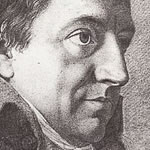 Early German Idealism and the Discovery of Nihilism (1781-1803)
Lecturer: Gregory Wood
Starts: Wed 6:30-8:30pm 17 Jun
Full Schedule: June 17, 24, July 1, 8, 15
Location: Online via Zoom only.
This course offers participants/students an opportunity to learn about the early foundations of German idealism and the birth of modern nihilism. An emphasis will be made on how the post-Kantian quest for the completion of the philosophical system drives the experimental methodology of philosophical speculation to its upmost limits. Consequentially, we will see why the will to absolute system and the discovery of nihilism become inseparable. Alongside a close analysis of key texts by Jacobi, Fichte, Hegel and Schelling, we will also explore further interpretations and analysis in secondary literature with the goal of understanding not only the continuing importance and ingenuity of German idealism, but how the study of the historical foundations of modern nihilism are relevant for philosophers today. By contextualising these specific concerns within a broader contemporary landscape of systems thinking, overcoming technological nihilism, and the end of philosophy via Heidegger, we will be able to appreciate the significance of returning to this pivotal moment in the history of Western philosophy.
Course Schedule
Lecture One. Introduction
- Systems thinking in an age of technological nihilism
- Heidegger, and the end of philosophy
- German idealism and the will to absolute system
Recommended reading:
- Hui (2019) Recursivity and Contingency – Introduction: A Psychedelic Becoming
- Stambaugh (1985) Nihilism and the End of Philosophy
- Storey (2011) Nihilism, Nature, and the Collapse of the Cosmos
- Heidegger (1985) Schelling's Treatise on the Essence of Human Freedom – Interpretation of the First Discussions in Schelling’s Treatise
Lecture Two. Jacobi and the Birth of Modern Nihilism
- Kant and the reception of the Critique of Pure Reason
- A short history of the origins of modern nihilism
- Jacobi’s critique of the rational system
Key text:
- Jacobi - Jacobi to Fichte from The Main Philosophical Writings and the Novel Allwill (1799), trans. G.D. Giovanni. McGill-Queen's University Press 1994.
Recommended reading:
- Kant (1929) Critique of Pure Reason – The Architectonic of Pure Reason
- Giesbers (2017) The Wall or the Door: German Realism around 1800 - German realism and the origins of philosophical nihilism
- Gillespie (1996) Nihilism Before Nietzsche
- Franks (2000) All or Nothing - Systematicity and Nihilism in Jacobi, Reinhold, and Maimon
Lecture Three. Fichte’s Wissenschaftslehre
- Introduction to the early Wissenschaftslehre
- Performative metaphilosophy and the circular task of systematic completion
- Speculative philosophy
Key text:
- Fichte - Concerning the Concept of the Wissenschaftslehre from Fichte: Early Philosophical Writings (1794), trans. D. Breazeale. Cornell University Press 1988.
Recommended reading:
- Breazeale (1988) How to make an Idealist: Fichte’s “Refutation of Dogmatism” and the problem of the starting point of the Wissenschaftslehre
- Lewin (2025) Fichte's Metaphilosophy
- Nuzzo (2014) Transcendental Philosophy, Method, and System in Kant, Fichte, and Hegel
- Oren (2024) Fichte and Hegel on Advancing from the Beginning
Lecture Four. Hegel’s Differenzschrift
- Absolute reason and the abyss of reflection
- The need of philosophy
- Nihilism as the methodological deconstruction of systematic philosophy
Key text:
- Hegel - The Difference Between Fichte's and Schelling's System of Philosophy, Preface and Introduction (1801), trans. H. S Harris & W. Cerf. State University of New York Press 1977.
Recommended reading:
- Harris (1988) Introduction to the Difference Essay
- Schaub (1912) Hegel's Criticisms of Fichte's Subjectivism
- Percesepe (1984) Telos in Hegel's Differenz des Ficthe'schen und Schelling'schen Systems der Philosophie
- Sandkaulen (2017) Hegel's First System Program and the Task of Philosophy
Lecture Five. Schelling’s Identitätssystem
- Identity, affirmation and indifference
- The ungrounding of difference and the problem of negation
- Absolute identity system as absolute nihilism
Key text:
- Schelling - Presentation of My System of Philosophy (1801), trans. M. G Vater. The Philosophical Forum Volume XXXII, No. 4, Winter 2001
Recommended reading:
- Satoor (2025) Identity-Monism or the Dark Night of the Absolute? Schelling’s System of Identity in the 1801 Presentation
- Brewer (2020) “The Unity that is Indivisibly Present in Each Thing” - Reason, Activity, and Construction in Schelling’s Identity Philosophy
- Groves (1999) Ecstasy of Reason, Crisis of Reason: Schelling and Absolute Difference
- McGrath (2016) On the Difference Between Schelling and Hegel - Rethinking German Idealism
 Technology and Politics
Lecturer: Amélie Berger Soraruff
Starts: Thu 5:00-7:00pm 18 Jun
Full Schedule: June 18, 25, July 2, 9, 16
Location: Online via Zoom only.
This course aims to offer an overview of the discipline of the philosophy of technology and to show how technological innovations challenge, redefine, or reflect current social practices, modes of governance, and conceptions of the human. The first hour of each class will be primarily theoretical; the second hour will focus on a case study, which students will be expected to discuss.
Course Schedule
Lecture 1: Philosophy of technology, an emerging discipline of the 20th century
The lecture will explain how from a marginal field of studies, left in the hands of engineering and economy, the philosophical reflection of technology became a major field of research that have generated multiple subfields of expertise from material studies, new media theory, design and architecture studies etc. Starting from Heidegger, it will explain the difference of approach between traditional continental philosophy and more empirically oriented analytic philosophy and how they respectively understand the concept of technology. The lecture will then discuss the emergence in the last few years of what is called a post-phenomenological philosophy of technology, exemplified by figures like Don Ihde, Bruno Latour and Bernard Stiegler.
Case study and discussion: Technology and the experience of expropriation, Heidegger’s typewriter.
Texts:
- Ihde, Don. ‘Heidegger’s Technologies: Pen versus Typewriter’. In Heidegger Circle Proceedings, 2010, Vol.44, p.41-50
- Heidegger, Martin. ‘The Question Concerning Technology’. In The Question Concerning Technology and Other Essays (New York: Harper & Row, 1977).
Lecture 2: Ideology and propaganda: the aestheticization of politics
This lecture will discuss how technological development crystallized game of powers, especially in and after the Second World War. With reference to the work of Joseph Schumpeter, this session will begin with a reflection on the concept of innovation and its renewed significance for the 20th century as an economical and ideological driver of progress. The conquest of space and the rise of mass media, such as the radio and cinema, are striking examples of how technological performance became intricated with ambitions of geopolitical dominance. To explore these ideas, the lecture will engage with Hannah Arendt’s Human condition (the conquest of space as alienation and form of modern defiance) and Adorno and Horkheimer’s Dialectic of Enlightenment (the cultural industries as the continuation of mass exploitation behind the alibi of entertainment). It will end by addressing what Walter Benjamin coined as the aestheticization of politics in his description of fascism, and how technologies are used to create a sense of spectacle in the expression of political power.
Case study and discussion: Cinema and the power of images in the (re)-construction of narratives.
Texts:
- Benjamin, Walter. The Work of Art in the Age of Mechanical Reproduction. Translated by J. A. Underwood. (Harlow, England: Penguin Books, 2008).
- Adorno, T. W., & Horkheimer, M. ‘The Culture Industry: Enlightenment as Mass Deception’. In Dialectic of Enlightenment. Trans. Edmund Jephcott (Stanford: Stanford University Press, 2002).
Lecture 3: Technologies of regulation and control: thinking new modes of governance
This lecture focuses on the way technologies are used to regulate, manage and control populations. It will primarily engage with the work of Foucault on biopower. More specifically, it will engage with bureaucracy, which Foucault’ views as a disciplinary technology that ensures docility and surveillance. With reference to the works of Jeremy Bentham on the Panopticon; or, the Inspection-House and Herbert Simon’s The Sciences of the Artificial, this session will take urbanism as an example of a broader panoptic dispositive — one that regulates the flow of populations and conditions, through the very design of space and amenities, their course and scope of action. It will transpose these issues to the digital sphere by engaging with Deleuze’s ‘Postscript on the Societies of Control’ and Zuboff’s The Age of Surveillance Capitalism.
Case study: Bentham’s perfect prison, the exercise of power as an all-seeing force.
Texts:
- Zuboff, Shoshana. “Make them Dance”, in The Age of Surveillance Capitalism: The Fight for a Human Future at the New Frontier of Power (London, England: Profile Books, 2019).
- Foucault, Michel. “Panopticism”, in Discipline and Punish: The Birth of the Prison, trans. Alan Sheridan (New York: Vintage Books, 1995).
Lecture 4: The bias of anthropomorphism: questioning our relationship with technologies
Technology and humanity have often been opposed, but philosophers such as Don Ihde, Bruno Latour, Luciano Floridi, and Paul Verbeek have shown that they in fact evolve within a far more symbiotic and continuous relationship than traditionally acknowledged. Technologies shape, mediate, and condition not only our experience of reality, but also our understanding of the self.
With reference to Winnicott’s work on transitional objects and Stiegler’s notion of techniques of care, this lecture will show how technologies have progressively been accepted and theorized as formative elements of subjective life—objects with which we may sometimes feel more comfortable interacting than with other humans. To explore this issue further, the lecture will then draw on Sherry Turkle’s The Second Self and Dona Haraway’s Cyborg Manifesto. It will examine how the computer has been integrated into our social and psychological lives, and how the normalization of its use reshapes our relationships with others, our sense of boundaries, and our experience of communication.
Case study and discussion: The Eliza computer programme, or the effects of anthropomorphism in our interaction with machines.
Texts:
- Reeves, B., & Nass, C. I. The Media Equation: How People Treat Computers, Television, and New Media Like Real People and Places. Center for the Study of Language and Information; Cambridge University Press, 1996.
- Weizenbaum, J. “Eliza – A Computer Program for the Study of Natural Language Communication between Man and Machine”, Communications of the ACM, vol. 9, no 1, 1966.
- Turkle, Sherry. The Second Self: Computers and the Human Spirit (New York: Simon and Schuster, 1984).
Lecture 5: Technologies of intelligence: the promises of AI in the elaboration of a “better world”
This lecture will draw on phenomenology to engage once again with the contributions of Adorno and Horkheimer, Michel Foucault, and Bernard Stiegler. It will examine how the mind has become a new site of power struggle, and argue that the stakes are no longer the colonization of the imagination, as feared in the mid-twentieth century, but rather the strategic extraction of intelligence. This is particularly evident with the recent democratization of AI programs, which feed on collective knowledge in order to reproduce it with the aim of generating revenue, while gradually eroding our intellectual skills. From Alan Turing’s “Computing Machinery and Intelligence” to Minsky and McCarthy’s 1956 Dartmouth conference, this final lecture will offer a brief history of AI. It will then use Simondon’s On the Mode of Existence of Technical Objects and Canguilhem’s Brain and Thought, to offer a critical examination of the myths that come with the promotion of robots as the idealized versions of humans, and the persistent portrayal of the brain as a kind of giant computer.
Case study: The Habermas Machine and the introduction of LLM systems in political decision-making
Texts:
- Habermas, J. A New Structural Transformation of the Public Sphere and Deliberative Politics, trans. Ciaran Cronin (Cambridge: Polity press, 2023)
- Tessler, M. H. et al., “AI can help humans find common ground in democratic deliberation” in Science 386, eadq2852 (2024). DOI: 10.1126/science.adq2852
 Classic Films for Teenage Boys
Lecturer: Mairéad Phillips
Withdrawn: This course is no longer available for enrolment.
Location: Online via Zoom only.
This course continues investigations begun in the 2021 MSCP Winter Course, Classic Films for Teenage Girls, which presented a Deleuzian reading of the “woman’s film” of the 1940s. In Classic Films for Teenage Boys, we interrogate male-oriented and centred genre pictures from Hollywood's "golden era" through a Deleuzean lens. Each lecture will focus on a specific "boys-own-adventure" genre and the directors and male stars that became synonymous with them.
Deleuze submits the "great genres" of the American studio system to a rigorous analysis and classification in his books, Cinema 1: The Movement-Image and Cinema 2: The Time-Image, published in France in 1983 and 1985 respectively. Deleuze’s cinema books are an attempt to give us a language to speak about the concepts proper to cinema. His aim is not to describe, nor to critique, but to find a language adequate to what it is directors are doing when they create images: “drawing out cinematic ideas means extracting thoughts without abstracting them, grasping them in their internal relationship with the movement-images” (Two Regimes of Madness).
The specific movement-image synonymous with these genre films is the action-image. The realism of classic Hollywood cinema is achieved through a specific organic approach to montage and the presentation of determined milieux through embodied behaviours. As Deleuze observes in his seminar on the Classifications of Signs and Time in January 1983, “American cinema has triumphed universally by bring the action-image to perfection.”
1. The Swashbuckler: Every Hero is a Product of a Situation
The action-image, first and foremost, begins from a determined state of things consisting of actualised qualities and powers within specific spatio-temporal coordinates. The situation throws a challenge to the hero who must necessarily react, modifying, in turn, the initial situation. We thus begin our analysis of these classic films for teenage boys, by exploring the milieux and behaviours of the adventure film as epitomised in the Curtiz-Flynn swashbuckling epics.
Reference films:
- CAPTAIN BLOOD (Michael Curtiz, 1935)
- THE ADVENTURES OF ROBIN HOOD (Michael Curtiz, 1938)
2. The Gunslinger: A Duel of Forces
At the heart of the action-image film is the duel or binomial, a specific sign in Deleuze’s taxonomy. Through the intermediary of action, the hero must prove himself worthy or equal to the situation, exemplified perfectly in the western when a final duel comes to a head: the street empties, the hero appears with a distinctive step, trying to guess where the other is and what he’s going to do. John Ford’s contribution to the genre is central to Deleuze’s analysis.
Reference films:
- STAGECOACH (John Ford, 1939)
- THE MAN WHO SHOT LIBERTY VALANCE (John Ford, 1962)
3. The Detective: Pathogenic Milieux
The action-image film pairs a hero to a situation and through the embodied behaviours responding to the challenge thrown down by the situation, the hero may modify or change the situation completely. There are many variations, however on this formula, S-A-S, and through an analysis of two poles of detective film (large-form and small-form), we will explore the influence of the milieux on the characters who inhabit it. The respective detective-heroes (Sam Spade and Philip Marlowe) are both played by Humphrey Bogart in two classics of the genre.
Reference films:
- THE MALTESE FALCON (John Huston, 1941)
- THE BIG SLEEP (Howard Hawks, 1946)
4. The Criminal: Cracked Behaviours
Through the lens of the crime film genre, we examine the second pole of the action-image: modes of behaviour and how those modes imply the health or otherwise of the milieu that spawn them. Cited alongside the pathogenic communities of alcoholics and born losers in the literary works of Jack London and F. Scott Fitzgerald, the film noir, whether large or small form, isolates a particular realist form of degradation where the American dream collapses into nightmare, which is no less real and embodied.
Reference films:
- SCARFACE (Howard Hawks, 1932)
- ASPHALT JUNGLE (John Huston, 1950)
5. The Contender: Sensory-Motor Violence
In the final lecture we will explore the genetic pole of composition of the action-image through the work of Elia Kazan as epitomised by the troubled male stars of the Actors’ Studio, Marlon Brando and James Dean respectively. Deleuze highlights the specific nature of realist violence exhibited by these films, stressing the relationship between the character and its surrounding milieu is what gives the action-image its weight, its essence.
Reference films:
- ON THE WATERFRONT (Elia Kazan, 1954)
- EAST OF EDEN (Elia Kazan, 1955)
Reference Material
- Gilles Deleuze (1986) Cinema 1: The Movement-Image, trans. Hugh Tomlinson and Barbara Habberjam, The Athlone Press
- Gilles Deleuze (1989) Cinema 2: The Time-Image, trans. Hugh Tomlinson and Robert Caleta, The Athlone Press
- The Deleuze Seminars, Cinema: The Movement-Image (1981-1982), and Cinema: The Classification of Signs and Time (1982-1983)
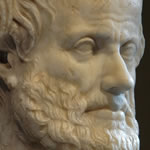 Principle of the living or the principled living: On the Inquiry on the Soul
Lecturer: Leksa Zhang
NB: 1st and 4th classes will be 4.30pm-6.30pm. Other classes will be 5.30-7.30pm.
Full Schedule: June 19 (4.30pm), 26 (5.30pm), July 3 (5.30pm), 10 (4.30pm), 17 (5.30pm)
Location: Brunswick and online via Zoom.
The course traces the emergence of inquiry on the soul in Greek antiquity, offering a broad overview of the literature from Homeric epos to Plato and Aristotle’s articulation of their doctrines on the soul. The starting point is to take seriously the opinion that antiquity has no psychology: that the notion of a soul and psychological inwardness not only emerges but also is hotly debated by the philosophers marks a historical progression and maturation of an occasion for thinking. What generates this inquiry? What were the conditions that enabled such an inquiry to emerge? The course examines how subjectivity is enunciated (and the lack thereof) in Homer, with an emphasis on Hector’s Farewell (Illiad, book VI). We then turn to the Oresteia as the formulation of a space of articulation that necessitates the beginning of a discourse on subjectivity. The emergence of subjectivity takes us to the crucial turning point in the trial of Socrates. We examine the Apology not merely as a philosophical document, but also as archeological evidence in the emergence of a civil and political culture of the subject. and finally, to Plato’s Phaedo and Aristotle’s De Anima as two attempts to respond to the puzzlement denoted by the name of the soul. We finally turn to the Symposium to illustrate the insecurity of the discourse on the soul or subjectivity. Rather than taking Plato or Aristotle’s doctrines of the soul as the solution or an answer, the course focuses on the puzzlements behind their responses, namely, an infirmity within the formulation of subjectivity as within the I: the I—or the principle of the I—eludes and escapes from the self. As the principle of the living, the soul merely marks the space for a principle in the human as a form of life, however, the space for the principle means exactly this: that for the human, no principle can be given. The principled I is an I external to the I; the soul is the principle of life that exceeds life.
Course Schedule
1. Homeric Psychology (Or the Lack Thereof)
The first session reviews the received wisdom (e.g. Dodd, Lukács) that no psychology existed for the Greeks. The epic world is a fully externalized world where no internal depth exists. While reading some episodes in the Iliad as evidence that subscribes to this point, we focus on Book VI, Hector’s Farewell, where Hector carefully enunciates his situation and perspective in first person singular. Although the epic world is, by and large, depthless externality, the standpoint of subjectivity already makes its claim on it and demands articulation, which is not yet fully possible within the epic world. Hector suffers his fate without fully being his fate, in contradistinction to Achilles; it is only where an I stands over and against its own fate, the concept of fate also emerges as the objective element, not fully commensurate with the subjective standpoint.
Reading:
- Lukács, Theory of the Novel
- Dodd, ch1
- Auerbach, Homer
- Iliad, Book VI
2. Oresteia: Tragic or Political Subjectivity
The second session traces the development of the problem after the epic age, in Aeschylus’ Oresteia trilogy. If the problem of psychology is not wholly alien to the greeks, but rather an emergent problem, then the problem of tragic ethics must also be considered in this light. The question guiding our reading will be: what is the form of subjectivity that is emergent in the tragedies? The thesis will be what is at stake in tragedy is a form of subjectivity that is culpable, that could be at fault, rather than merely an extension of mythical forces (e.g. fate or gods). The trial of Orestes demonstrates the emergence of a secular ethics and its concomitant politics, wherein the subject, rather than doing merely what justice orders, is himself responsible for his judgment of what is justice and his deed. Subjectivity, then, is no longer passive, but an active element at play in the world. Furthermore, as tragedies are a crucial part of Athenian democratic civic life, tragedy plays a role in the civil education of the polis in producing politically and ethically responsible agents who must bear the responsibility of their deeds. The emergence of a subject in tragedy is inseparable form the emergent forms of political and ethical life.
Reading:
- Aeschylus, Oresteia Trilogy
3. Apology: Subject of Responsibility Between Violence and Persuasion
Having established the problem of subjectivity as emergent and gaining prominence in Athens, we now turn to Socrates’ trial. Taking Socrates as an responsible agent as the premise of the trial, we now examine Socrates’ apology as an analysis of factors that affect the agency of an individual. In our reading, we will focus on the problem of persuasion and violence: according to Socrates, persuasion is almost something physically forceful, it disrupts the internal operation of subjectivity, and in this aspect resembles violence; at the same time, persuasion is also the method of philosophy, and the goal of his apology in court is precisely to persuade the Athenians of his guiltlessness. Supplementing the Apology, we will also read the allegory of the ship in the Republic and Aristophanes’ Clouds, where persuasion and violence are treated as a continuum rather than opposites in politics. Triangulating the relation between persuasion, violence, and truth, we explore the difficult relation between politics and philosophy, and how the dialectic affects and interacts within the forcefield of subjectivity. The subject is not only the actor in politics and philosophy, it is also a forcefield open to disruption and interference from external forces and principles. The subject that acts and speaks, we shall see, has no innate principle within, but is subject to principles that, on the one hand, must be taken up by the subject by its own reasoning, on the other hand, whose reasoning for accepting the principle is constantly undermined and at risk from forces beyond oneself.
Reading:
- Apology
- Republic Book 6
Recommended reading:
- Aristophanes, The Clouds
4. Question of the Soul: Plato’s Phaedo
The question of psychology emerges in Athens not as a contained doctrine, but as a problematic, a sphere of questioning. When Plato begins to formulate his doctrine of souls, the first task of reading must be to more concretely determine of shape of his question. What is the form of the subjectivity that has a soul? What demand does the concept of the soul, as an answer, fulfil? We have seen previously that the subject is the agent that acts in politics and persuades in philosophy, it is a subject that speaks and operates with logos; furthermore, we see that logos or reasoning, although has certain rules within it and is in this sense autonomous, it also carries no innate access to truth as such and is vulnerable to being hijacked by external principles. Logos or reason, we shall see, is a principled space without its own principles. A forcefield that innates requires a principle for its operation, without being able to provide itself with a principle or having a principle simply given to it, is the form of subjectivity at stake in philosophy. Both the form of its principledness and its lack of innately-given principle will be focused on in our reading of Phaedo. The dialectic plays on the very principledness of the soul that reasons, whereas the doctrine of forms is Plato’s attempt to give a principle to the soul where no principle is simply given. This allows us an opening to turn to the opening paragraphs of Aristotle’s De Anima, where an overview of the puzzlement on the soul is most powerfully articulated.
Reading:
- Phaedo
- Aristotle, De Anima, book 1
5. Question of the Soul: Aristotle’s De Anima
The final lecture continues with Aristotle’s De Anima as the culminating statement on the question of the soul in 4C BC. We are in a position to conclude that 1) the query on the soul emerges as an autohermeneutic in response to the ethical and political form of life in Athenian democracy where 2) the subject is a responsible agent acting according to principles, but without any principle being innately given to them. The question of the soul delineates the puzzlement of a form of living’s longing for principle, for the human is the principled form of living. We interpret Aristotle’s doctrines of substance and teleology also in this light, as attempts to articulate a form of life and its concomitant world. Shifting the theory of souls from a doctrine to a puzzlement, we reactivate the relevance of these texts for us. The question of the soul—in Aristotle’s and Plato’s formulations—still speaks to us, not because of their doctrinal content, but because of the same longing that still drives us today. Turning to the Symposium, we finally acquired the key to decipher the philosophical eros at stake. Be it the Aristophanes’ myth of wholeness or Diotima’s ladder of beauty, we philosophize because we are the form of life that longs for something that is not given.
Reading:
- Aristotle, De Anima, Book 2&3
- Plato, Symposium
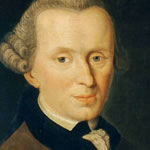 Kant’s Critique of the Power of Judgment: An Introduction
Lecturer: Andrew Benjamin
Starts: Mon 6:30-8:30pm 20 Jul
Full Schedule: July 20-24
Location: Brunswick and online via Zoom.
Immanuel Kant’s Critique of the Power of Judgment (1790) remains one of the most influential texts in the history of philosophy. It might be argued that it is the source of the critique of instrumentality that dominates the writings of Heidegger, Arendt and Agamben. Equally, it plays a powerful role in the thinking of Jean François Lyotard. The aim of this intensive course is to provide a way into the text that will involve both explanatory lectures and detailed studies of specific fundamental passages. Each session will consist therefore of an introductory lecture followed by the group study of a particular section of the text. The text is sufficiently complex that an introduction is necessary, however it is also important that the text itself be studied. The aim of this course is to provide both. The course will necessitate therefore an openness to working with difficult and demanding material.
Course Schedule
The sections to be studied in detail are the following:
Lecture/Seminar 1. §10-12
A study of these sections introduces what Kant means by a ‘judgement of taste’. In so doing it allows a clarification of how an ‘aesthetic judgements’ is to be understood. It also introduces the distinction between the ‘sensible’ and the ‘supersensible’; a distinction that is fundamental to the Kantian project.
Lecture/Seminar 2. §20-22
Central to what is meant ‘the judgement of taste’ is the link Kant establishes to what he terms ‘common sense’. The recourse to ‘common sense’ opens up a connection between the subject and universality. It is in this connection that the aesthetic is then linked to the realm of the political and thus to the presence of the public sphere. This begins to introduce the dimension of Kant’s work on the aesthetic that was fundamental to both Arendt and Lyotard. In addition to this historical dimension, studying these sections will allow for an understanding of the way in which subjective universality overcomes the problem that seems to haunt any discussion of art which is the identification of subjectivity with the capacity of an individual to hold an opinion.
Lecture/Seminar 3. §27. On the quality of the satisfaction in the judging of the sublime
The two terms that are taken to be central to the Kantian aesthetic project are the beautiful and the sublime. A detailed engagement with this section will yield an understanding of what Kant means by the sublime. It is in terms of the sublime that the Kantian conception of both the ‘infinite’ and the ‘supersensible’ can be further clarified
Lecture/Seminar 4. §40. On taste as a kind of sensus communis
The term ‘sensus communis’ plays a fundamental role in the thinking of Arendt; equally it was central to Jean Francois Lyotard’s continual engagement with Kantian aesthetics. This lecture/seminar will concentrate specifically on what Kant intends by the ‘sensus communis’ in so doing it will also establish the connection between the aesthetic and what might be called a philosophical anthropology and thus on how the concept of the public sphere is central for an understanding of both. If there is a politics in Kantian aesthetics then is not located in the attribution of a political content to works of art, rather it is there in the necessity of there being a public realm in which aesthetic disagreement can be staged.
Lecture/Seminar 5. §49 On beauty as a symbol of morality
This section is one that brings to a close the first part of the Critique of the Power of Judgment. On one level it can be read as providing a culmination of the overall argument. Indeed it might be claimed that the identification of the aesthetic with the moral is the point at which Kant was always aiming. Attention to this section however will allow the tensions within his account of morality and the preceding insistence on the necessity of the public realm to be explored. In other words/ the identification of beauty as a ‘symbol of morality’ opens up that which may appear one of the most contentious and problematic aspects of the text as a whole.
Texts:
- Immanuel Kant. Critique of the Power of Judgement. Edited and translated by Paul Guyer. Cambridge University Press. Cambridge.